

Why a Desk That Grows With Your Child Changes How They Study
Sep 22, 2026
Somewhere between the ages of three and twelve, most children go from barely reaching a tabletop to towering over it. In that same window, they go from scribbling with crayons to doing an hour of homework a night. Almost no piece of furniture in the house is asked to keep up with that much change - except, if it's designed correctly, the desk.
We build children's desks and chairs for a living, and this post is less a product pitch than a set of notes on what actually makes a study set-up work for a growing child: why fixed-height furniture quietly works against kids, how a height-adjustable desk and an ergonomic chair solve that, and what goes into building the mechanisms that make adjustment possible without a single tool.
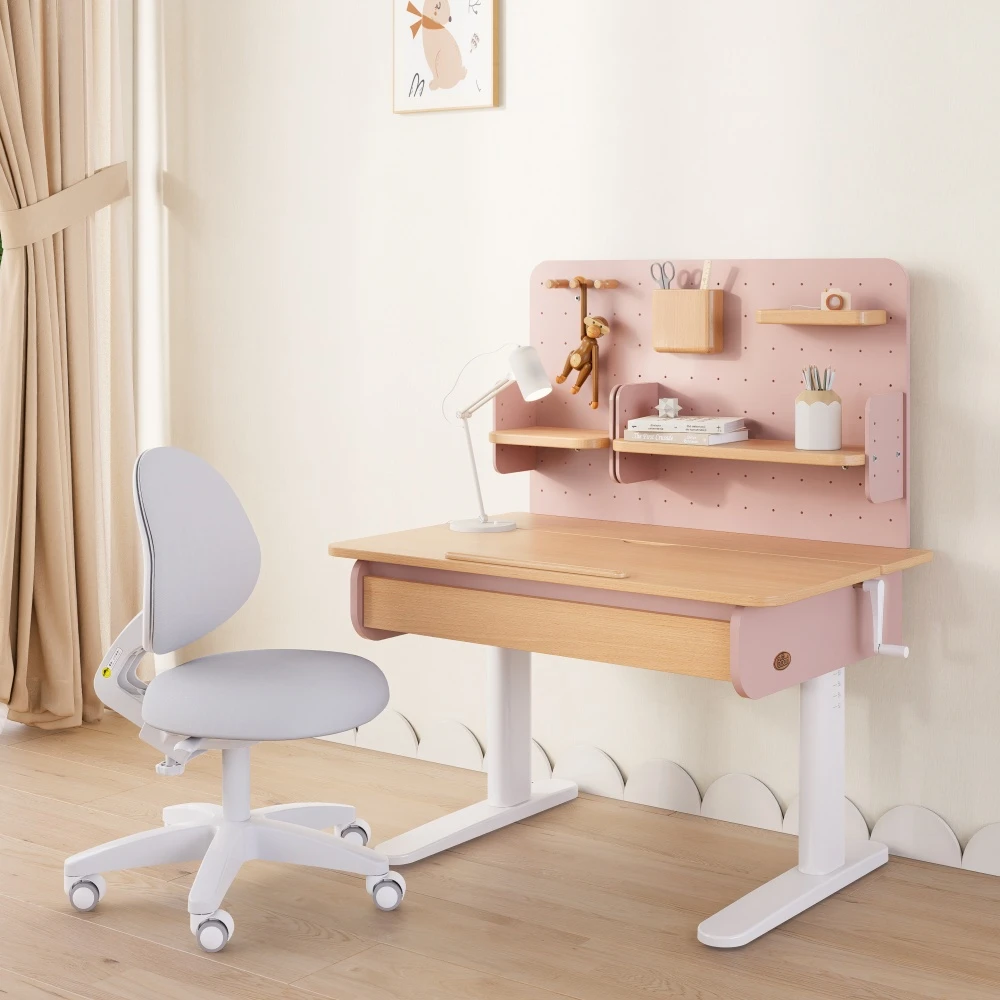
What a fixed-height desk gets wrong
A standard desk is built for one height, sold to a family that will not stay one height. Buy it too big and a five-year-old swings their legs with no support and hunches forward to reach the surface. Buy it sized to a five-year-old and it is wrong within eighteen months. Most families solve this by simply putting up with poor posture for a year or two before the next furniture purchase - which is a strange amount of tolerance for something children do for hours a day, most days of the week.
The fix is mechanical, not aesthetic: a desktop and a chair that both move. Ours adjusts across a documented range rather than a couple of pre-set notches, which matters more than it sounds - a child's proportions change gradually, not in two or three jumps, so the furniture should be able to as well.
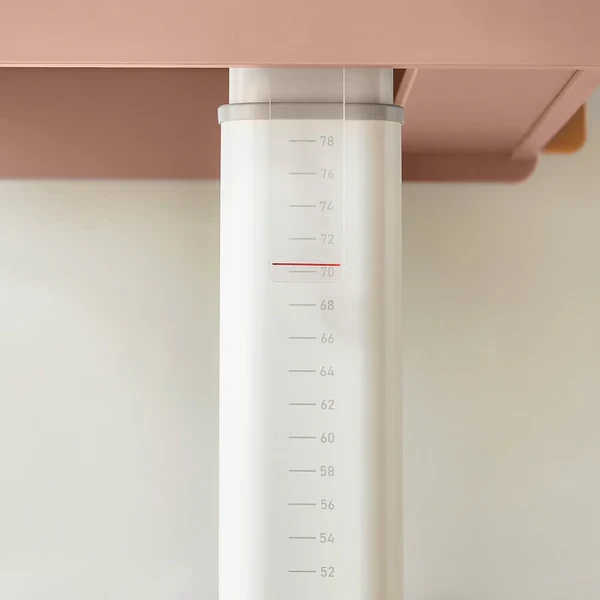
How the adjustment mechanism actually works
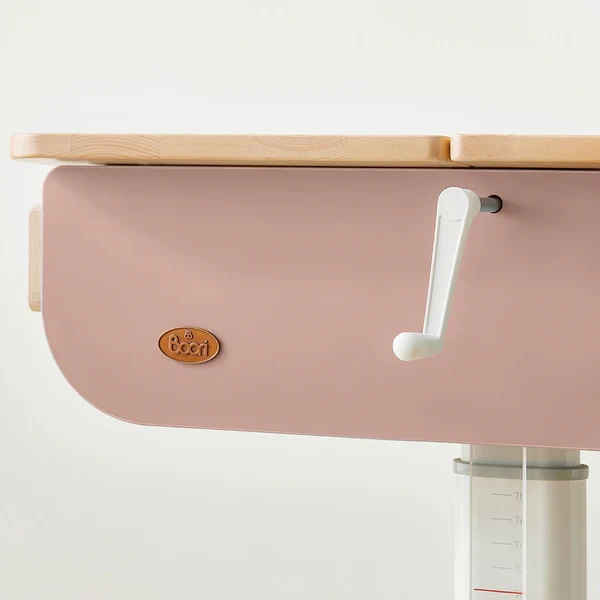
This is the part that tends to get skipped in product write-ups, but it's the part that determines whether a desk still works smoothly in year three. Our height-adjustable student desk for bedroom use raises and lowers on a manual hand-crank system rather than a powered motor. That's a deliberate choice: no battery to charge, no motor to eventually fail, no cord near a child's desk. A parent turns the crank, the desktop moves along a marked column, and the height locks in place at whichever line matches their child's current measurements.
It's a simple mechanism, which is exactly why we spend disproportionate time on it in production. A crank with a single stripped gear or a column with an uneven bore turns a five-second adjustment into a stuck desk, so every unit that leaves our Jiaxing factory has that column and crank tested under load before it's packed, not just sample-checked at the design stage.
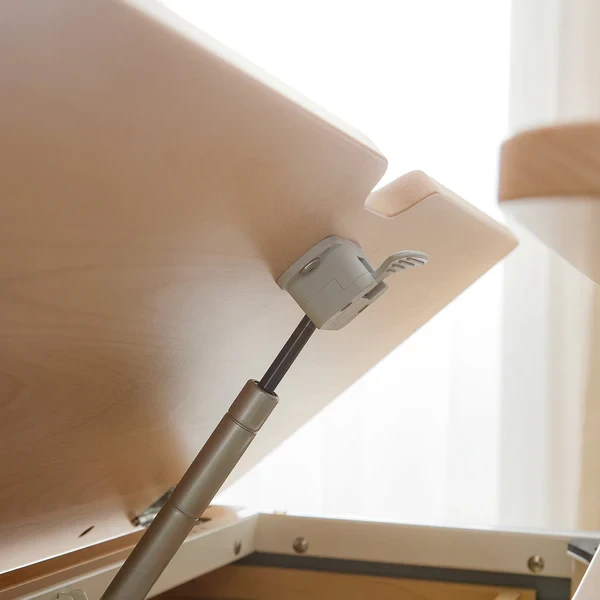
A desktop that tilts, too
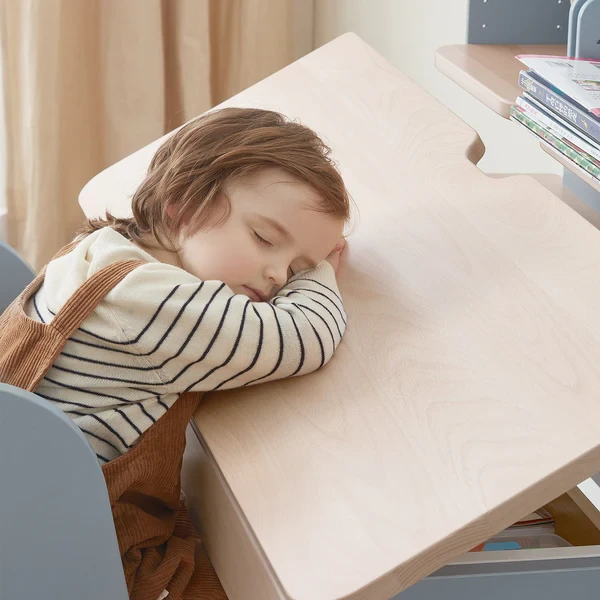
The second mechanism worth mentioning has nothing to do with storage - that's handled separately, by drawers built into the desk. This one is about angle: the same desktop can tilt upward, supported by a gas-strut hinge instead of a basic pivot or a prop-stick. Lift the front edge and the strut holds the slope on its own at a comfortable angle for reading, drawing, or tracing, rather than forcing a child to hunch over a flat surface.
Lower it back down for regular writing or laptop use, and the same strut controls the descent instead of letting the desktop drop on its own - useful in the same way a soft-close drawer is useful, just applied to a tilting surface instead of storage.
The chair carries half the job
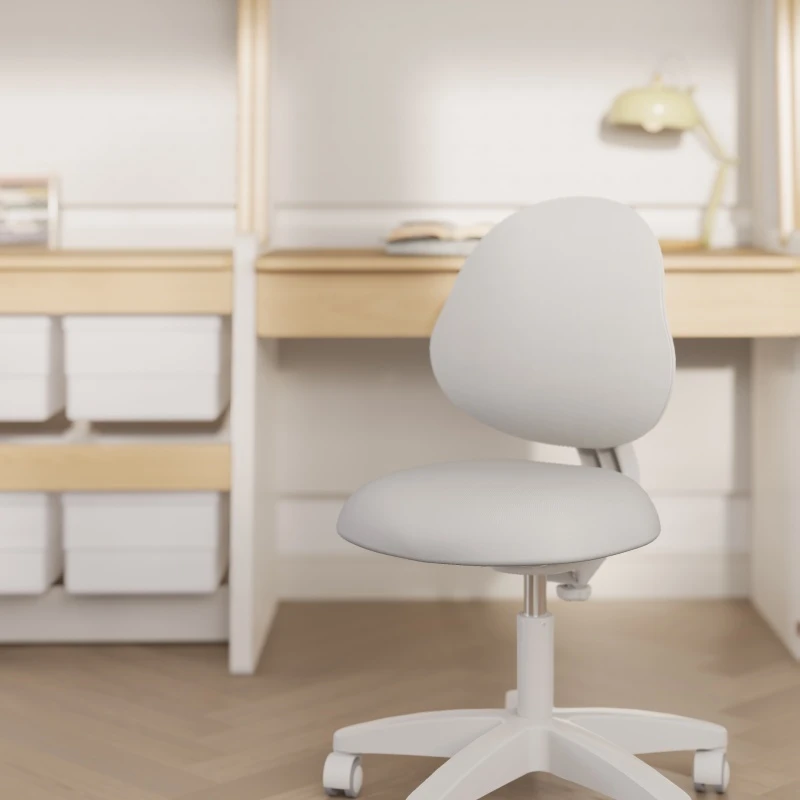
A height-adjustable desk paired with a static chair only solves half the posture problem, which is why we treat the two as one system rather than two separate SKUs. Our kids study chair range includes a contoured, curved-backrest design on a swivel base with casters, giving a child's spine support through a full range of desk-facing postures rather than just one fixed angle.
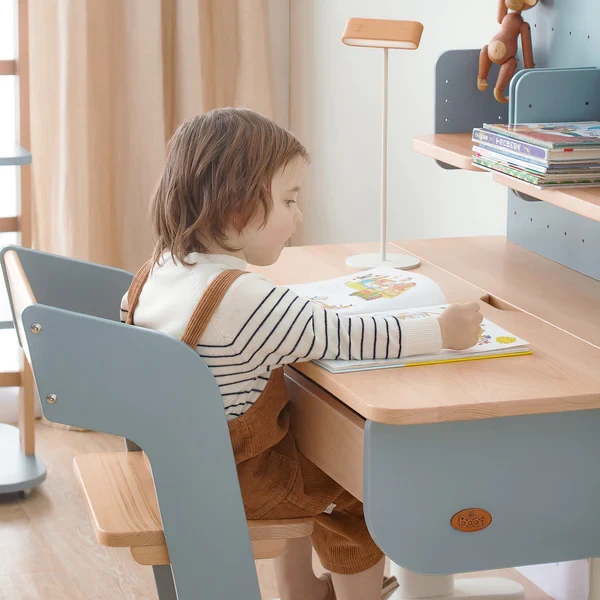
Not every family wants a chair on wheels, though, so we also build a fixed wooden ladder-back version with a stepped footrest, matched in finish to the desk. It's a more traditional seat, better suited to a shared study table or a classroom-style room, and it still keeps a child's feet supported instead of dangling - which, on a standard adult-height chair, they usually are.

What this looks like once it's actually in a bedroom
Specs and hardware only tell half the story; the other half is whether a child will actually sit there. In practice, the pieces that get used the most are the ones that don't feel like "school furniture" - a warm wood tone, a pegboard for the odd stuffed animal or picture, a desk lamp within reach. Comfort matters just as much as ergonomics on paper: a desk a child is willing to sit at for twenty extra minutes does more for their studying than a perfectly spec'd chair they avoid.
That's really the test we build toward - not just correct measurements, but a setup a child chooses to use without being told to.
Who actually builds this
Zhejiang Hanhao Industrial Co., Ltd has been manufacturing wooden furniture in Jiaxing, Zhejiang since 1993 - 33-plus years now, covering baby, kids, and adult furniture for OEM and ODM partners worldwide. Production runs across a 130,000+ sqm facility with 300+ pieces of equipment and 200+ skilled workers, and the factory holds ISO 9001:2015 and FSC certification, with independent product testing carried out by Intertek and SGS. That's the manufacturing base behind the desks and chairs in this post, and behind the rest of our kids' furniture collection - you can read more about the factory on our About Us page.
If a height-adjustable desk and chair are part of a bigger room refresh, it's also worth browsing our kids bedroom furniture sets, built in matching finishes so a desk, bed, and storage can be ordered as one coordinated set rather than pieced together separately.


