

One Bed, Four Stages: What Actually Goes Into a Crib That's Built to Grow
Sep 29, 2026
Most families buy a bed for their baby, then buy a bed for their toddler, then buy a bed for their child. That's three purchases, three deliveries, and three pieces of furniture that eventually end up in storage or on a resale site. A convertible crib is built to break that cycle - one frame that changes shape as the child does, from a newborn's bedside cot through to a freestanding daybed a school-age kid can read on.
We manufacture this kind of convertible bed, and this post walks through what "convertible" actually means in practice: which parts move, which parts detach, and why each stage is built the way it is rather than just being a marketing label on an otherwise ordinary crib. For a factory, "convertible" is really a promise about hardware tolerance holding steady across four very different configurations - and that's the part worth explaining properly, rather than skipping straight to the finished product photos.
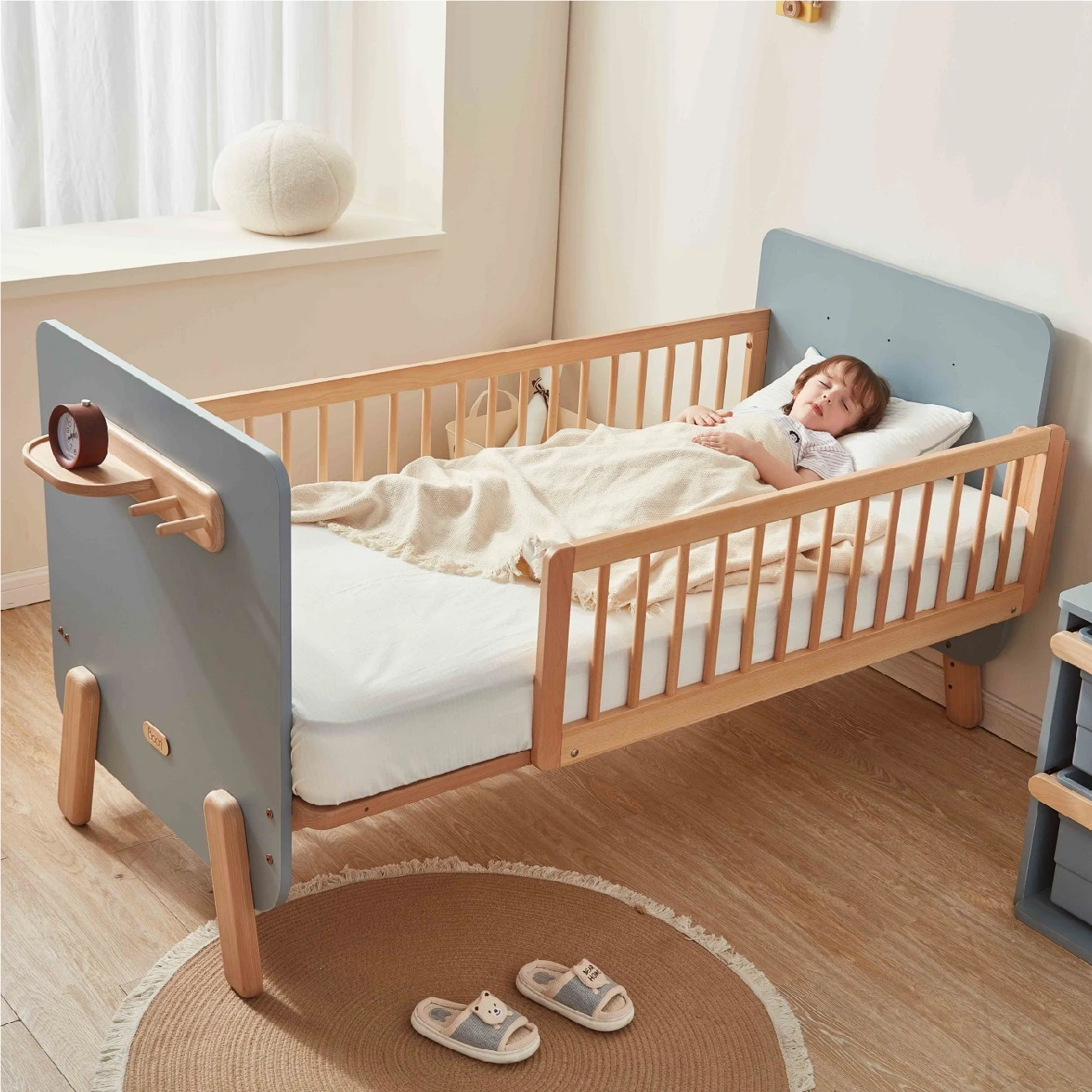
Stage one: a bedside cot for the newborn months
The first months are the reason this design exists at all. In its earliest configuration, one side panel of the bed lowers or detaches, and the frame sits flush against a parent's own bed - close enough for a parent to reach over and check on, settle, or lift a newborn without leaving their own mattress. It's the same idea behind a standalone bedside sleeper, except here it's one stage in a bed that keeps going rather than a separate piece of furniture the family will outgrow in a few months.
We build this stage the same way we build any bedside sleeper: locking hardware that holds the side panel firmly at parent-mattress height, so "attached" actually means attached, not propped.
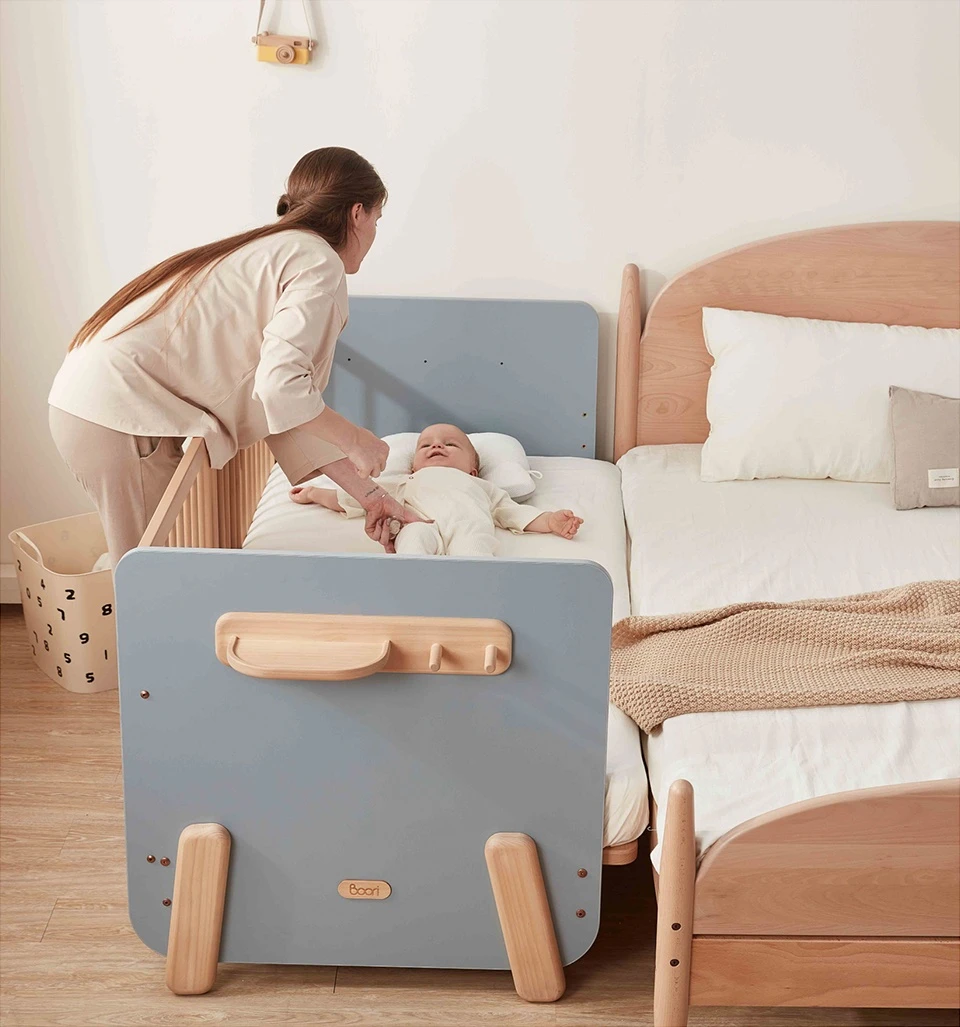
Stage two: a full crib with guardrails, for the toddler who moves
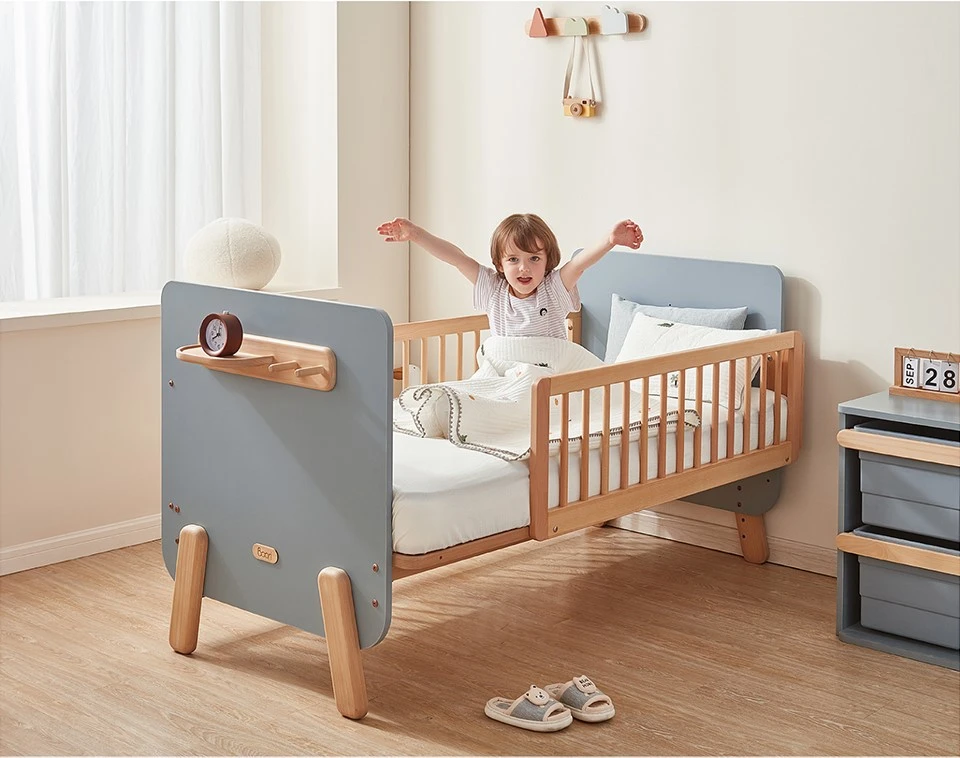
Once a child is mobile, the same frame reconfigures into a fully railed bed - slatted sides on all four edges, a solid headboard and footboard, and a mattress height low enough that climbing in and out doesn't require help. This is also where the wood construction matters most: beech and pine frames, sanded and rounded at every edge a toddler's hands or knees will actually touch, since this is the stage where a bed gets used for more than sleeping.
It's worth linking this stage to a convertible cot from our own catalog, since it follows the same logic: one frame, reconfigured hardware, rather than a second bed purchased to replace the first.
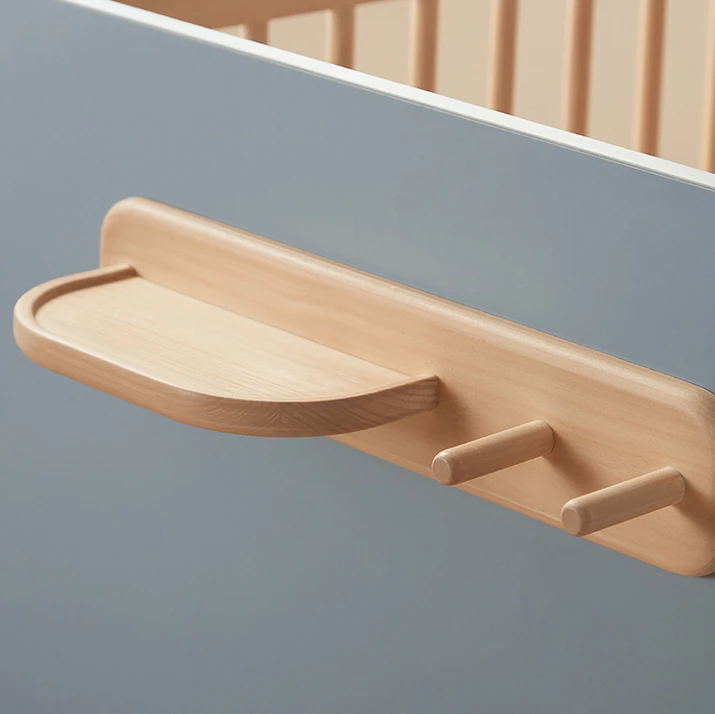
A shelf that's built in, not bought separately
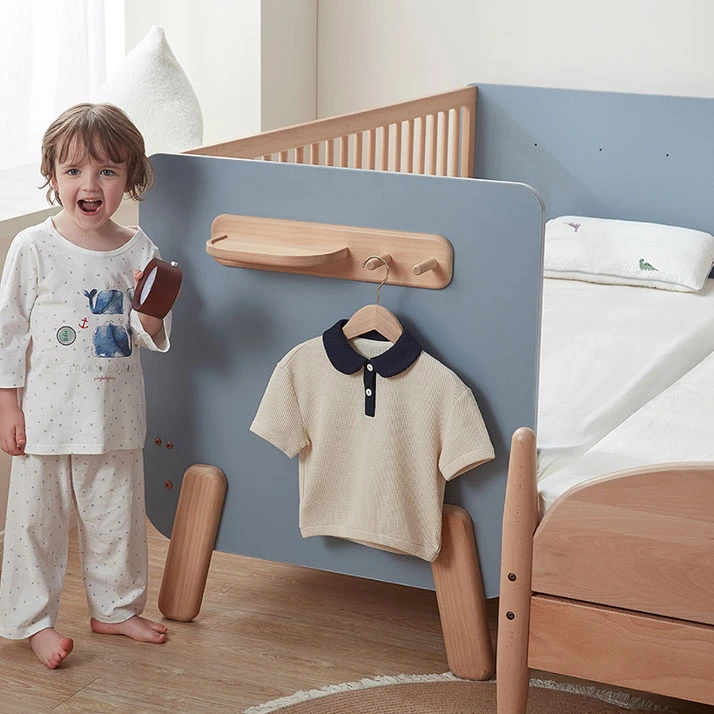
The detail that tends to get noticed after the fact, rather than at the point of purchase, is the small attached shelf on the headboard panel - somewhere for a clock, a nightlight, or the handful of small objects that otherwise end up on the floor beside a child's bed. It's a small piece of hardware, but it's also one less accessory a parent has to source, mount, and match to the rest of the room separately.
Stage three: a daybed for the child who's done with rails
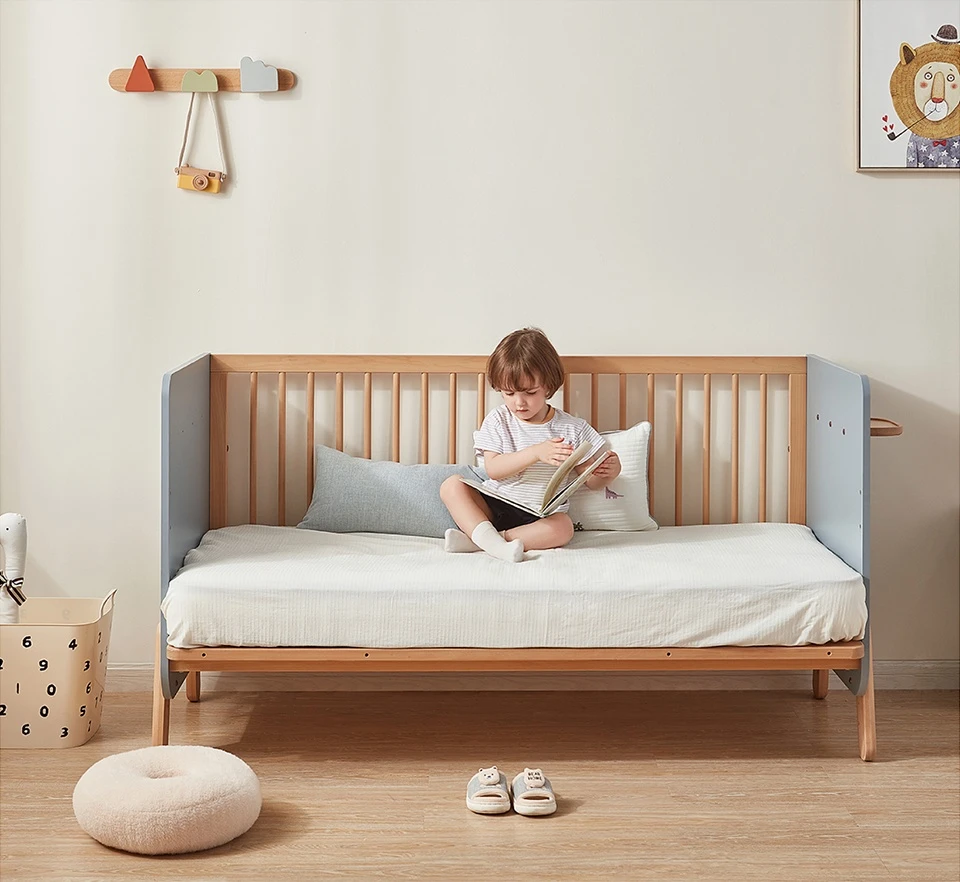
The last conversion removes the guardrails and footboard entirely, leaving a low wooden frame with just the headboard standing - functionally a daybed. This is the stage most families don't plan for when they buy a crib, and it's also the stage that gets the most use per year, since a six- or seven-year-old sitting cross-legged with a book gets more daily mileage out of a bed than an infant asleep in one. Our toddler single bed range picks up from exactly this point, for families who want the same low-frame, rail-free design without starting from the infant stage.
A frame that reaches this point without wobbling, gaps, or mismatched hardware is really a test of the first three stages, not the fourth - which is why we test full assembly and disassembly cycles during development, not just the finished static frame.
What holds it together, structurally and on paper
None of the four stages matter if the hardware connecting them loosens over time, so the frame relies on bolted, reusable fixings rather than one-time assembly hardware - the same screws and fittings are meant to come apart and go back together as the bed changes configuration, not be replaced each time. On the certification side, our cot- and crib-stage products are tested by Intertek against EN 716, the relevant cot safety standard, alongside FSC certification for the timber itself.
Zhejiang Hanhao Industrial Co., Ltd has been manufacturing wooden baby and children's furniture in Jiaxing, Zhejiang since 1993 - 33-plus years now, across a 130,000+ sqm facility with 300+ pieces of equipment and 200+ skilled workers, holding ISO 9001:2015 and FSC certification with independent testing from Intertek and SGS. You can see more of that production background on our About Us page, and browse the rest of the cot and crib range in our baby furniture collection.
For families weighing this against a simpler bedside-only option, it's worth comparing directly against a bedside cot bed from the same range - a good fit if the newborn stage is the priority and a full four-stage conversion isn't needed.
Built for distributors as much as for parents
If you're reading this as a buyer rather than a parent, the more relevant question is usually not "does it convert" but "can it convert reliably across a production run of a few thousand units." That's where most convertible-bed designs actually fail on the factory side - not in the concept, but in hardware tolerance drifting between batches until the panels that were supposed to lock flush start needing extra force, or stop aligning at all.
We treat this as a manufacturing problem, not just a design one. Finish colors, hardware placement, and headboard shelf details can be adjusted under OEM/ODM to match an existing product line, and every stage - bedside mode, full rail mode, and daybed mode - gets reassembled and checked during our own QC process before a production run ships, not only during initial sample approval.


